
Cashback and Coupon Affiliates: How They Work
Cashback and coupon sites can drive big volume, but brands need the right rules. Learn how these affiliates work and how to manage them well.

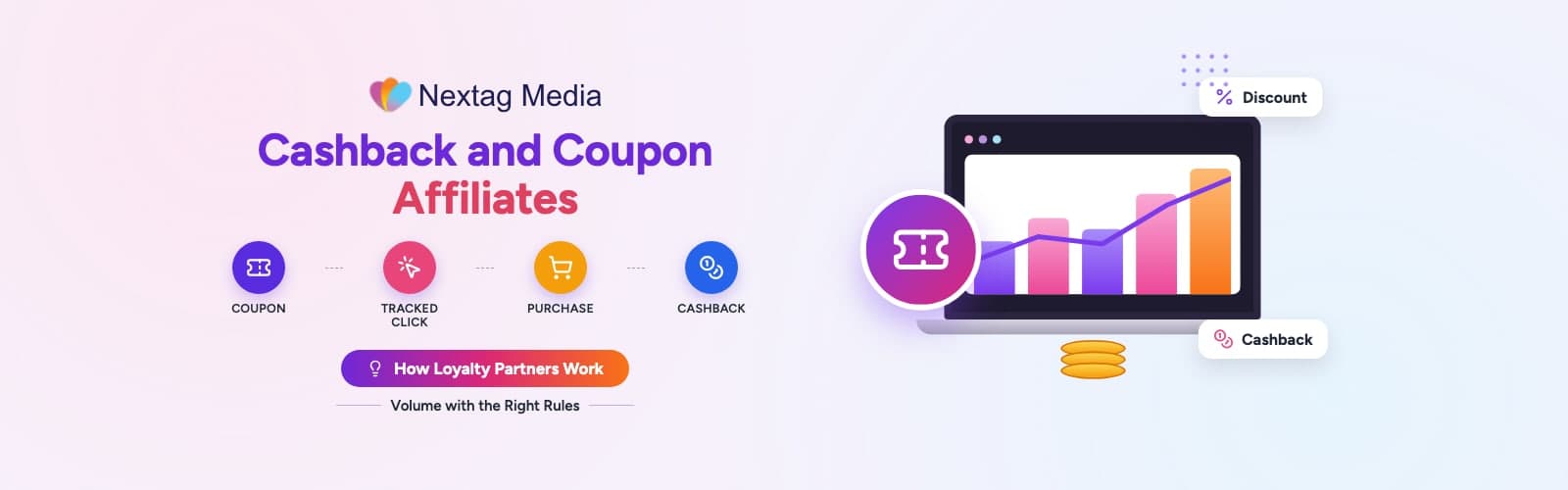
Cashback affiliates share part of their commission with shoppers as money back, and coupon affiliates publish discount codes and deals. Both earn a commission when a shopper buys through their tracked link. They can drive large volumes, but brands should manage them carefully so they reward real influence rather than sales that would have happened anyway.
Key takeaways
- Cashback sites pay shoppers part of the commission to win their loyalty.
- Coupon sites attract shoppers searching for discount codes, often late in the purchase journey.
- Risk: paying commission on customers who were already about to buy.
- Fix: clear rules on codes, attribution and which actions earn full commission.
How cashback affiliates work
- A shopper visits the cashback site and clicks through to the store.
- The click is tracked and the shopper buys.
- The store pays the cashback site a commission after validation.
- The cashback site passes part of it to the shopper's account.
How coupon affiliates work
Coupon sites rank for searches like "[brand] coupon code". They list codes and deals with tracked links. When a shopper clicks to reveal or use a code and then buys, the coupon site earns the commission.
Pros and cons for brands
| Pros | Cons |
|---|---|
| High volume and fast scale | Can claim credit late in the journey |
| Attract price-sensitive new customers | May reduce margins with extra discounts |
| Good for sales events and launches | Leaked codes can spread without control |
| Strong loyalty communities | Needs close monitoring |
How to manage cashback and coupon partners
- Use exclusive codes per partner so you know who drove the sale.
- Set different commission rates for new vs returning customers if your tracking supports it.
- Ban unauthorised codes (codes you did not give the partner).
- Review attribution windows and how last-click rules affect content partners. See Attribution Models Explained.
- Watch toolbar and extension behaviour that may override other partners' clicks; set rules in your terms.
Conclusion
Cashback and coupon affiliates are powerful for volume, especially during sales. Managed with clear codes, fair commissions and good attribution, they add real customers instead of just taking credit. Read our Affiliate Compliance Guide for policy ideas.
Want help setting fair partner rules?
Join thousands of publishers monetizing their audience with NextagMedia.
Frequently Asked Questions
A website or app that earns affiliate commission and gives part of it back to shoppers as cashback.
They can be, especially for new customers and sales events, as long as codes and attribution are controlled.
Because some coupon clicks happen right before checkout, so the brand may pay commission on sales it would have made anyway.
They receive commission from the brand or network after the sale is validated, then share part of it with the shopper.
Get Growth Insights in Your Inbox
Join thousands of marketers getting weekly affiliate & performance marketing insights.
No spam. Unsubscribe anytime.
Ready to Start Earning?
Join thousands of publishers monetizing their audience with NextagMedia.

Head of Publisher Success
Ryan leads publisher success at NextagMedia, helping affiliates and content partners maximize earnings through better tracking, creative, and offer selection. With years of experience on both the network and publisher side, he understands what makes affiliate partnerships thrive for the long term. Ryan is a frequent advocate for transparent reporting and fair, on-time payouts.
Comments
Related Articles
Best Affiliate Networks in 2026
Not all affiliate networks are built the same. Here is how to evaluate and choose the right ones for your traffic in 2026.
 Priya Sharma
What Is an Affiliate Network? How It Works
An affiliate network sits between brands and publishers, handling offers, tracking and payouts. Here is how it works and when it makes sense for you.
Priya Sharma
Affiliate Marketing Glossary
From CPA to smartlinks to chargebacks, this glossary breaks down the affiliate marketing terms you will encounter most often.
 Anupam Kumar
How Smartlinks Work
One link, many offers. Here is how smartlink technology decides which campaign to show each visitor.
Priya Sharma