
How to Start Affiliate Marketing Without a Website
Want to earn money through affiliate marketing without creating a website? Discover beginner-friendly strategies using YouTube, Instagram, Facebook, Pinterest, LinkedIn, and email marketing. Learn the best platforms, tips, and mistakes to avoid to start earning affiliate commissions in 2026.
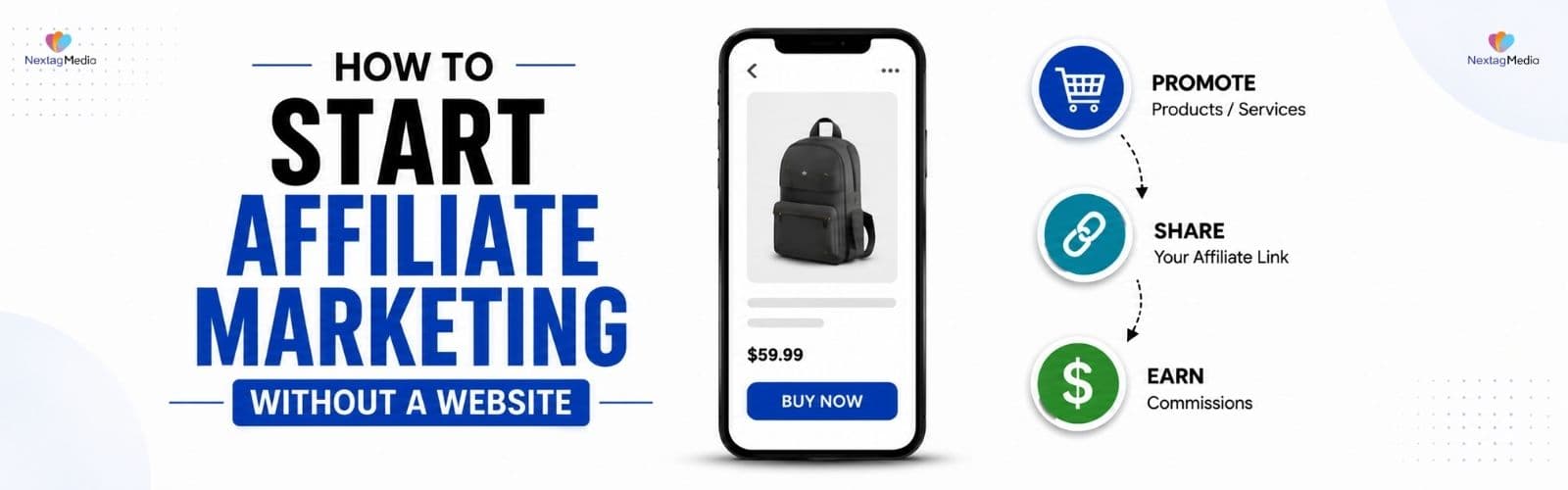
Many beginners believe they need a website before they can start affiliate marketing. The good news is that's not true.
Today, thousands of affiliate marketers earn commissions through social media, YouTube, email newsletters, messaging apps, and online communities without owning a website. The key is choosing the right platform, building trust with your audience, and recommending products that genuinely solve problems. While having a website can provide long-term advantages, it is no longer a requirement to begin your affiliate marketing journey.
In this guide, you'll learn how to start affiliate marketing without a website, the best platforms to use, and practical tips to maximize your earnings.
What Is Affiliate Marketing?
Affiliate marketing is a performance-based marketing model where you promote someone else's product or service using a unique affiliate link. When someone purchases through your link, you earn a commission.
The process is simple:
- Join an affiliate program.
- Get your unique affiliate link.
- Share it with your audience.
- Earn a commission whenever someone buys through your link.
Can You Really Do Affiliate Marketing Without a Website?
Yes.
A website is just one way to attract customers. You can also use platforms where people already spend their time, including:
- YouTube
- TikTok
- Telegram
- WhatsApp Communities
- Email Newsletters
The most important factor isn't having a website—it's building trust and providing valuable content.
Best Ways to Start Affiliate Marketing Without a Website
1. Promote Products on YouTube
YouTube is one of the best platforms for affiliate marketing.
Create videos such as:
- Product reviews
- Tutorials
- Comparison videos
- "Best Products" lists
- Unboxing videos
Add your affiliate links in the video description and mention them during the video.
Example:
A video titled "Best Budget Laptop Under ₹50,000" can include affiliate links for each laptop.
2. Use Instagram
Instagram works well for promoting fashion, beauty, fitness, gadgets, and digital products.
Share:
- Reels
- Stories
- Carousel posts
- Product demonstrations
Place your affiliate link in your bio or use a link-in-bio tool if the platform limits direct links.
3. Start a Facebook Page or Group
Facebook groups still generate significant engagement.
Share:
- Helpful tips
- Product recommendations
- Tutorials
- Live demonstrations
Avoid spamming affiliate links. Instead, provide useful information first.
4. Create Pinterest Pins
Pinterest acts like a visual search engine.
Design attractive pins linking to:
- Affiliate landing pages
- Product pages (where allowed by the affiliate program)
- Educational content
Pinterest content can continue generating traffic for months.
5. Build an Email List
Even without a website, you can build an email list.
Offer:
- Free PDFs
- Checklists
- Templates
- Mini guides
Send valuable emails regularly and recommend relevant affiliate products.
An email list is one of the few marketing assets you truly own.
6. Share Helpful Content on LinkedIn
If you're promoting:
- Online courses
- Business software
- AI tools
- Marketing tools
- Productivity apps
LinkedIn can be highly effective.
Write educational posts instead of direct sales pitches.
7. Join Relevant Communities
Communities like:
- Facebook Groups
- Quora
- Telegram
allow you to answer questions and share helpful advice.
Only recommend affiliate products when they genuinely solve the user's problem and when community rules allow promotional links.
Best Affiliate Programs for Beginners
Here are some beginner-friendly affiliate networks:
- Amazon Associates
- ClickBank
- CJ Affiliate
- Impact
- ShareASale
- PartnerStack
- Digistore24
Choose products related to your niche instead of promoting everything.
Tips for Success
Choose One Niche
Focus on one category such as:
- Technology
- Finance
- Fitness
- Digital Marketing
- Education
- Fashion
- Travel
A focused niche helps build credibility faster.
Create Helpful Content
People rarely buy from random links.
Instead, create content that:
- Solves problems
- Answers questions
- Compares products
- Explains features
- Shares personal experiences
Helpful content builds trust, and trust drives conversions.
Be Consistent
Affiliate marketing is a long-term business.
Post consistently:
- Daily
- Three times a week
- Weekly
Consistency matters more than perfection.
Track Your Results
Monitor:
- Clicks
- Sales
- Conversion rate
- Best-performing content
Use this data to improve future campaigns.
Always Disclose Affiliate Links
Be transparent with your audience by clearly stating when a link is an affiliate link. Honest disclosures help build trust and may also be required by laws or affiliate program policies.
Common Mistakes to Avoid
- Promoting too many products
- Posting only affiliate links
- Ignoring your audience's needs
- Expecting instant income
- Choosing products you don't understand
- Not reading affiliate program rules
Do You Eventually Need a Website?
Not necessarily—but having a website offers long-term benefits:
- Better SEO traffic
- Greater control over your content
- Higher credibility
- Ability to publish detailed reviews
- Easier email list building
Many successful affiliate marketers begin without a website and build one later as their business grows.
Final Thoughts
Starting affiliate marketing without a website is completely possible in 2026. Platforms like YouTube, Instagram, Facebook, LinkedIn, Pinterest, and email newsletters provide excellent opportunities to reach an audience and earn commissions.
Focus on delivering genuine value, recommending products you believe in, and building trust over time. Affiliate marketing isn't a get-rich-quick scheme—it rewards consistency, patience, and helpful content.
Whether you're a student, freelancer, or someone looking for an additional income stream, you can begin today without investing in a website. Start with one platform, master it, and grow your affiliate business step by step.
Frequently Asked Questions
Yes. You can use platforms like YouTube, Instagram, Facebook, Pinterest, LinkedIn, or an email newsletter to promote affiliate products.
YouTube and Instagram are among the most beginner-friendly platforms because they offer strong organic reach through valuable content.
Yes. Most affiliate programs are free to join, and you can begin using free social media platforms.
It varies. Some affiliates earn their first commission within weeks, while others may take several months depending on content quality, audience growth, and consistency.
Yes, but building a website later can improve your long-term growth, search visibility, and control over your business
Get Growth Insights in Your Inbox
Join thousands of marketers getting weekly affiliate & performance marketing insights.
No spam. Unsubscribe anytime.
Browse High-Converting Offers
Find your next top-performing offer from our curated marketplace.
Comments
Related Articles
Affiliate Marketing Glossary
From CPA to smartlinks to chargebacks, this glossary breaks down the affiliate marketing terms you will encounter most often.
 Anupam Kumar
Affiliate Marketing for Beginners
Everything a new affiliate needs to know to understand the model, choose a niche, and earn their first commission.
 Garima Singh
Affiliate Marketing Myths
Affiliate marketing has more misconceptions than most industries its size. Here is what is actually true.
 Meera Nair
Affiliate Program Checklist
Launching an affiliate program without a solid foundation creates problems that are far harder to fix later. Use this checklist first.
Garima Singh